
Foto
Twilight shot of The Hague skyline reflected on the Hofvijer Canal

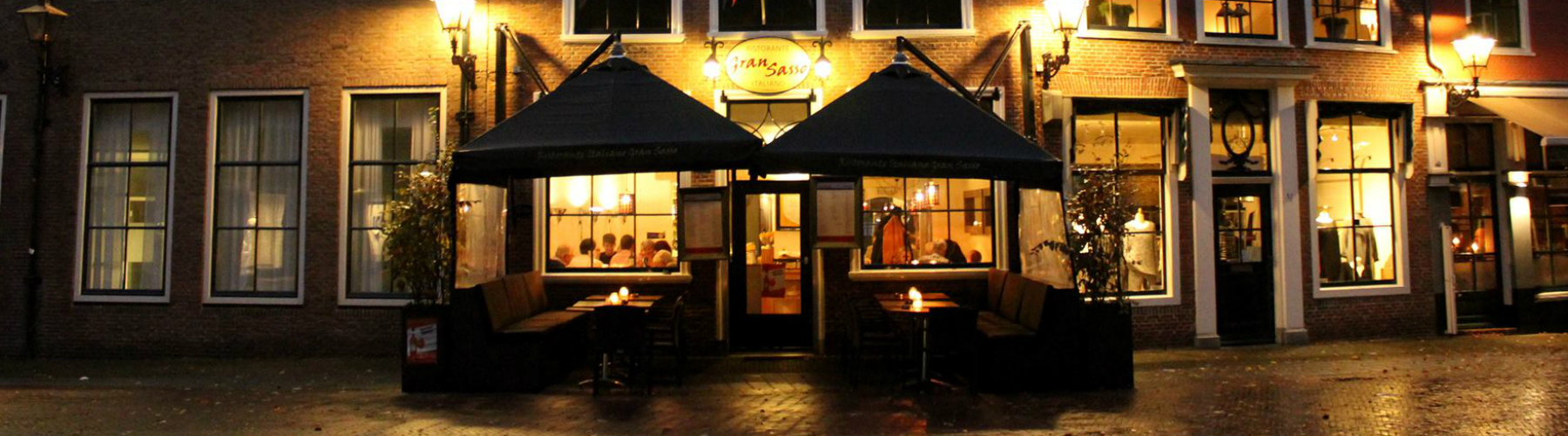
Ristorante Gran Sasso is in Rijswijk, a Dutch town and municipality near The Hague. It's run by Angelo Barbagallo, who turned it into a top-notch Italian restaurant. We've interviewed him and asked him some questions.

How did it all start?

Ristorante Gran Sasso was started in 1993, I began working there in 1994 as a waiter. Back then, I just wanted to gain experience, and that job was the perfect opportunity. I stayed there for three and a half years I was able to learn many things, mostly as far as wines were concerned, and I could add this new knowledge to the culinary one I already had, after having attended schools and academies.

In 2000 I started my first business, a deli, which I run for four years and turned out to be a success. However, all I wanted was to have my own restaurant. I fulfilled my dream in 2004, when I opened the Osteria Vino e Cucina in The Hague with my brother, who had moved from Sicily himself. I worked there until 2008, when I managed to take over the Gran Sasso, which has since become my number one priority.

Things are going great now, since Dutch people really appreciate my creative cooking.

Foto


Can you tell us what "creative cooking" is?

The typical products of the Italian culinary tradition are extremely important to me, and that's why I want Dutch people to get to know them too: most of the time, Italian cooking is associated to "maccheroni, pizza, and spaghetti", and that's a pity, because we're much more than that. My dishes are based on light, innovative combinations: though seemingly unconnected, they actually go well with each other, creating an unusual, yet extremely tasty mix of flavors. It took me many tries to create these recipes, but I'd say it was worth it, given the success they've been met with. 


Where do you find the raw materials you use in your dishes?

We import many raw materials directly from Italy, like cold cuts, cheese, flour, olive oil, rice, pasta, tomatoes, and preserves. We buy meat, fish, and vegetables directly at the local markets. Our meat also comes from South America, particularly from Argentina, and from Ireland as well. 

Foto


Which are the tastiest dishes on your menu?

That's a question I get asked quite often. I don't think there's a real Italian cuisine: in my opinion there's a mix of regional cuisines, and each of them has its own peculiarities, unlike the Netherlands, where these differences don't exist at all. Italy's culinary traditions give our customers the opportunity to always try out new and innovative recipes. For instance, I come from Sicily, but I draw inspiration from the recipes of Northern, Central, and Southern Italy. My goal is to give Dutch people the chance to explore and taste the flavours of our beautiful Peninsula.

I like cooking according to the seasons, so that I can always differentiate the dishes of our menu: during winter, for instance, I prefer broad beans, lentils, and pork meat, whereas when the temperature rises I can unleash my fantasy and cook lighter dishes, many of whom are based on vegetables and fish.

Our most famous dishes are tuna tartare with canapés and avocado served on tarragon cream, guinea-hen ravioli with black truffle sauce, tagliatelle with lard, courgettes, tomatoes, and pecorino primo sale siciliano, larded prawns au white wine, veal cutlets with garlic and mint vinaigrette, and tiramisu

Foto
news Vero Italian Restaurant L'italianità a Miami
Foto
news La Treccia, passione autentica per prodotti caseari di alta qualità in Danimarca   Nel luglio 2014 i due cugini italiani Luca Vigliarolo e Oscar Ferraro, dopo essersi persi di vista per un piccolo periodo, si sono ritrovati in Danimarca nella cittadina di Ishoj per concretizzare un sogno che li motivava sin da piccoli, quello di aprire La Treccia, il proprio caseificio nel quale produrre specialità gustose e di alta qualità. Amanti della mozzarella e della burrata, prodotti caseari che all’estero sono poco conosciuti, i due cugini hanno deciso di perseguire l’obiettivo di diffondere questa forma d’arte gastronomica con impegno, professionalità e passione. Dal 2014, utilizzando latte biologico danese, presso La Treccia, Luca e Oscar producono formaggi freschi come la mozzarella, la burrata, la ricotta rispettando il tradizionale metodo italiano della “cagliata “o pasta filata”. In questi anni di produzione e sperimentazione, grazie al loro tocco creativo e alla loro incontenibile voglia di mettersi in gioco e sperimentare, hanno inventato un prodotto caseario chiamato crumblino. Questo tipo di formaggio è nato in collaborazione con Hija de Sanchez 'Taquería a Copenaghen. Risulta salato e leggero al tempo stesso. È ritenuto una versione di lusso della tanto amata ricotta richiamando il sapore di un noto formaggio fresco messicano. Della loro passione per l’arte casearia italiana e di come i loro prodotti stanno riscuotendo tanto successo in Danimarca conversiamo piacevolmente con loro in questa esclusiva intervista.
Foto
news Nonno Zacca, quando la sperimentazione e la professionalità raggiungono l’eccellenza   Nonno Zacca a Barcellona è il posto ideale per gustare una pizza di alta qualità con alla base un impasto inedito e una farcitura genuina fatta di prodotti che fanno la differenza.  Con questo progetto ambizioso Francesco ha creato una fusione tra i sapori italiani e quelli catalani creando una varietà di pizze gustose che non troverete da nessuna parte. Questi giovane italiano, figlio di pizzaioli artigiani, è motivato nel diffondere un’arte della pizza di qualità in cui la genuinità e la creatività consentono di differenziarsi e raggiungere l’eccellenza.  Immersi in un ambiente conviviale in cui vi sembrerà di essere in Italia, presso Nonno Zacca, potrete sperimentare specialità di pizza sempre nuove che cambiano in base alla stagionalità dei prodotti. Grazie a questo lavoro  Francesco esprime la sua parte più creativa e soprattutto mantiene vivi i ricordi e i sapori della sua terra d’origine che non dimenticherà mai e che è viva in tutto quello che svolge quotidianamente, grazie a questo settore che ama tanto. Ce lo racconta in questa esclusiva intervista che trasuda passione ed entusiasmo per un’arte in cui non si finisce mai di apprendere e sperimentare.
Foto
news Umbria: il paradiso dei country relais L’Italia è un Paese curioso e variegato per geografia, morfologia e storia. L’Umbria ne costituisce il cuore verde: confinante con Toscana, Lazio e Marche, è conosciuta per le sue città collinari medievali, per le foreste che ne colonizzano il territorio e per i tartufi che ne profumano i piatti tipici. Spesso si parla della sua inaccessibilità al mare e di quanto, effettivamente, sia interna rispetto alle altre regioni: ma è proprio per questa sua peculiarità che è diventata il paradiso dei country relais.